Cernari: operational intelligence engine.
Cernari is a TURKAY product. It sits on the data foundation you already run, Microsoft Fabric, Snowflake, Databricks or BigQuery, and lets teams ask their business what happened, why, and what needs attention next from Teams, WhatsApp or a private web assistant.
Ask
Natural-language questions across your operational systems. Answers cite the source, the table and the last refresh, so teams trust what they read.
See
Patterns, anomalies, trends and quiet risks surfaced without being asked. Nothing dramatic, only what matters in the operation right now.
Act
Move from insight to action: route to Teams, WhatsApp, or trigger a workflow. Human-in-the-loop where decisions carry weight.
Remember
Your business glossary, table definitions and tribal knowledge turned into a queryable memory, so answers stay consistent across the team.
Govern
Permissions, audit log, source citation, confidence score and data lineage. Enterprise-grade trust is on by default, not an afterthought.
Built on your data foundation.
Cernari connects to the semantic model you already have. ERP, ATS, payroll, planning, transport and housing systems flow into your warehouse; Cernari turns that foundation into an operational voice.
Microsoft Fabric
FeaturedOneLake, Lakehouse and Semantic Model
Snowflake
Data Cloud, Cortex-compatible
Databricks
Lakehouse and Unity Catalog
Google BigQuery
Lakehouse and Dataform
AWS Redshift
Warehouse and Lake Formation
Custom Postgres / Trino
Bring your own warehouse
One live vertical, a focused roadmap behind it.
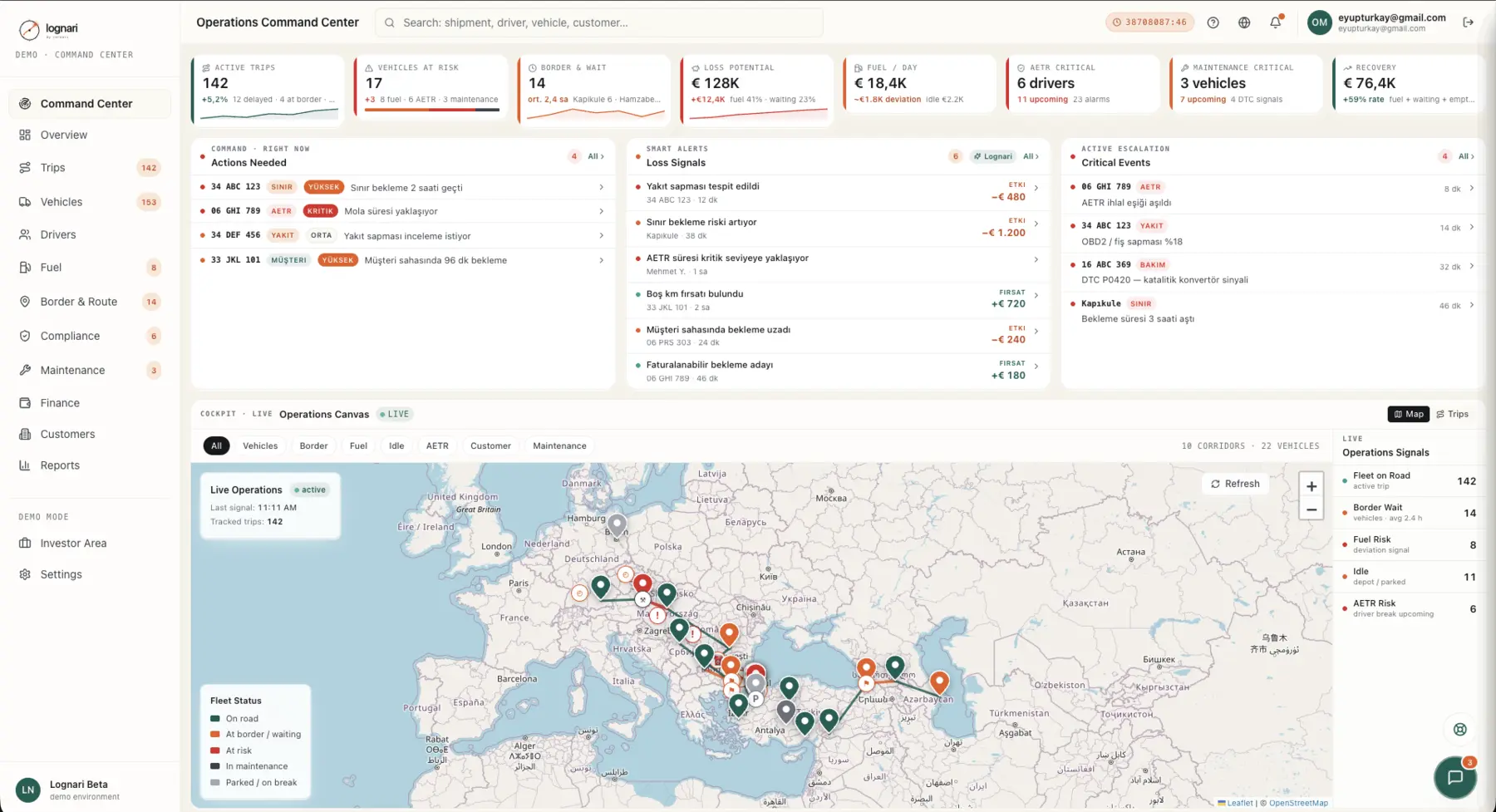
Cernari does not have one fixed interface — it becomes the decision surface each operation needs. Lognari is the live, in-production vertical today. The rest are on the roadmap, each grown from a sector I have actually built systems inside, not a speculative product list.
On the roadmap
In development — shaped by real engagements before they ship as products.
See the live product at cernari.com or the working demo at demo.cernari.com.
Cernari, explained.
Common questions about what Cernari is, how it fits your data foundation, and how we scope it.
Book a demoWhat is Cernari?
Does Cernari replace our BI or data warehouse?
Which data platforms does Cernari work with?
How do teams interact with Cernari?
What are the five primitives?
How is Cernari priced?
How does Cernari handle access control and trust?
Can we see Cernari before committing?
Want to see Cernari on your own data foundation?
Book a short walkthrough. We bring example questions; you bring the operation you cannot quite see, and we work through it together.